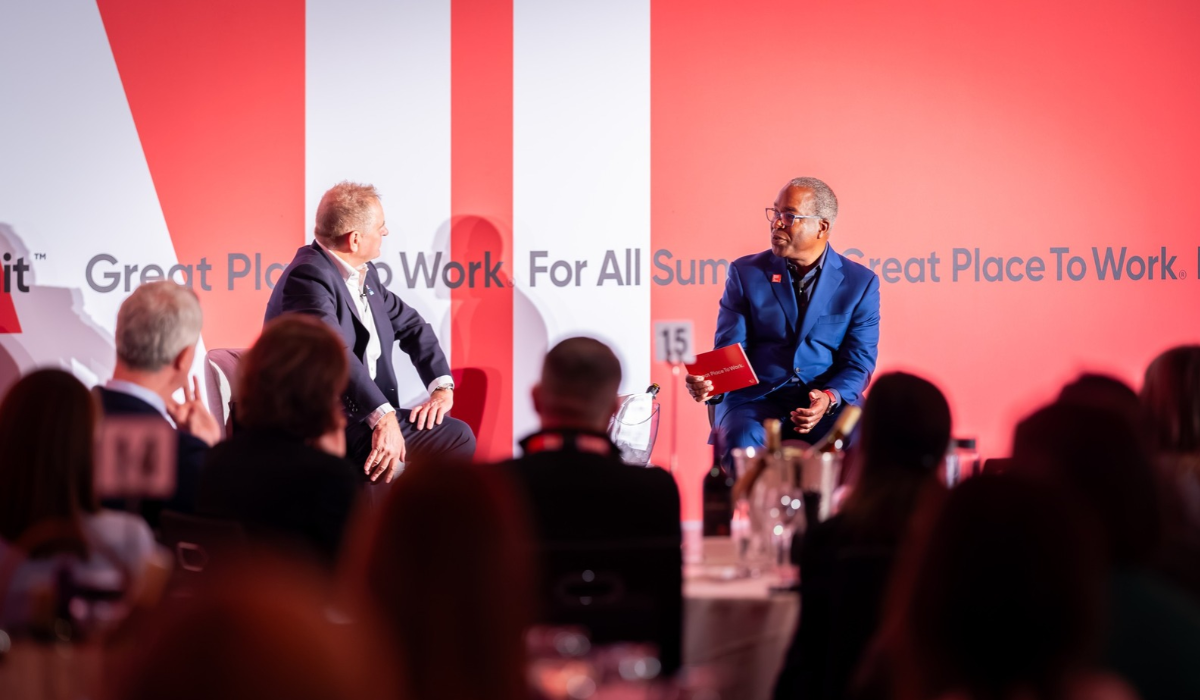



One message came through loud and clear at For All Summit™ London: when the world of work won’t sit still, a high-trust culture is what keeps organisations moving forward and delivering better business results.
What does it take to build a high-performing culture when the world of work is changing faster than ever?
That was a key question of For All Summit™ London, where industry leaders and some of the world’s most successful organisations came together to explore how culture can help people and businesses thrive through change.
Here are some of our biggest takeaways from the two-day event:
1. Leadership is not a role, but an experience
Opening the main stage, organisational psychologist and Founder of APS Intelligence John Amaechi OBE challenged leaders to think about the impact of their own behaviours.
Effective leadership, Amaechi argued, means understanding the power and impact you have, giving honest and useful feedback, reducing anxiety and calibrating your communication to what different people and teams actually need. In his own words:
“Leadership is not a role or a title, it’s a promise of a kind of experience... It's the compilation of tiny, discrete behaviors that turn someone experienced from ordinary into extraordinary."
John's message aligns with what we know to be true from our own research at Great Place To Work – it is everyday leadership behaviours that build trust, shape culture and drive performance.
Related | Discover the key leadership behaviours that drive success
2. Successful AI adoption starts with trust, not the technology
Unsurprisingly, AI was another major theme. But the conversation was less about the latest tools and more about a fundamental question:
How do you introduce AI in a way that strengthens rather than undermines trust?
Former Head of the UK Government’s Office for AI Sana Khareghani urged organisations to resist treating AI as a single technology, or rushing towards investment for investment’s sake.
Instead, she encouraged leaders to bring together the people who understand the business' challenges with the people who understand the technological solution, then determine where AI can genuinely make a difference.
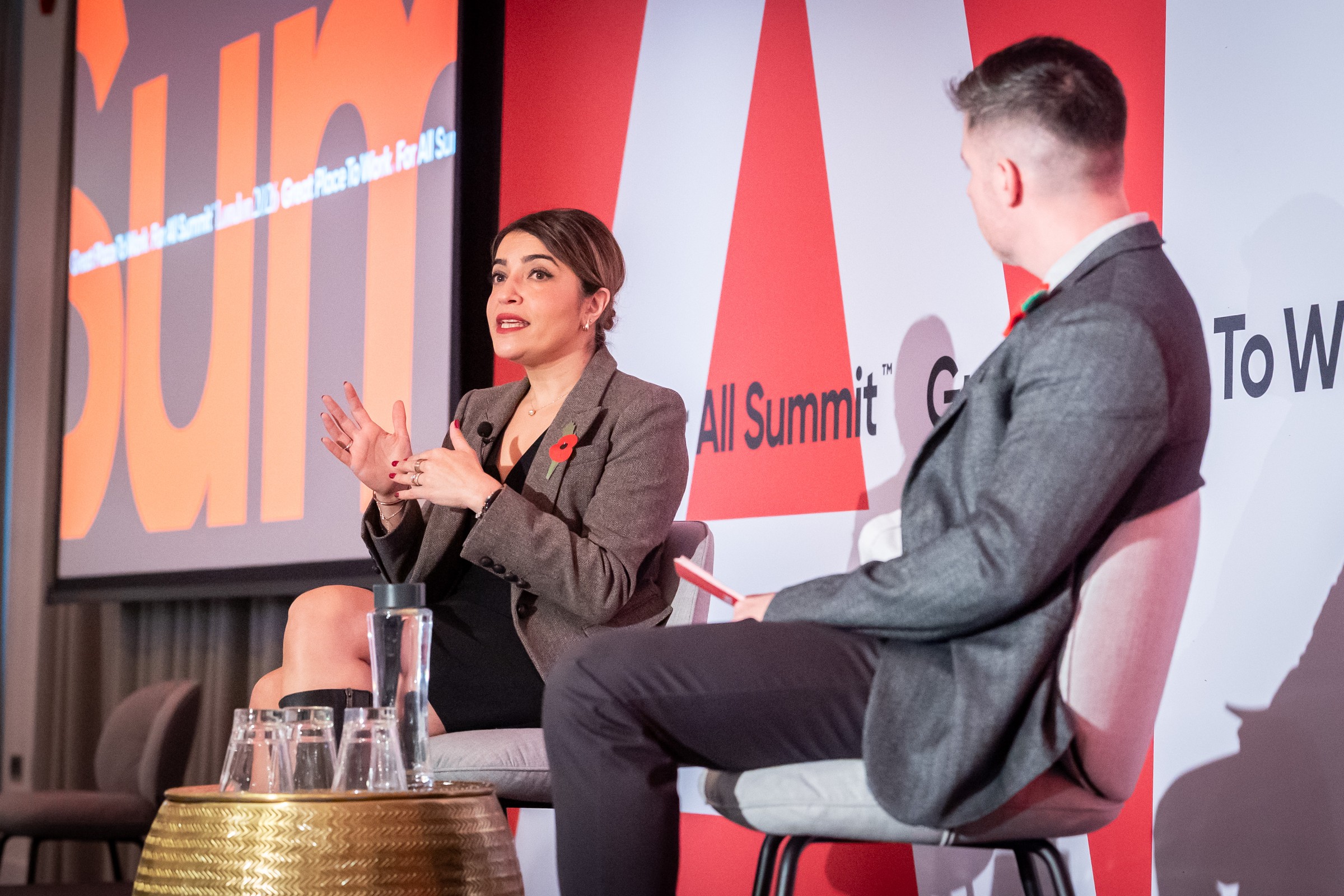
Sana Khareghani speaking on stage at the For All Summit London 2026
Later, Experian's Global HR Chief Operating Officer, Claire Logan, shared how AI technology sits within the company's wider culture of experimentation, psychological safety and responsible adoption. At Experian, AI adoption is supported by initiatives including an AI Council and dedicated opportunities for employees to learn and experiment within guardrails that ensure data is protected amidst innovation. And leadership is where it all began. As Claire explains:
"We started with our leaders – helping leaders understand that in an era of AI, they've never done it before. So it's really important for us to say, 'As a leader, you're going to now need to lead out of a place where you're not the expert. In fact, none of us are the experts.'
By keeping humans in the lead, investing in leadership training, and utilising multiple ERGs, reverse mentoring, and other forms of employee-led innovation and L&D, Experian ensures that ALL their people remain actively involved in the company's AI transformation journey.
3. Scaling culture requires clarity and consistency
When businesses grow quickly, maintaining a consistent culture becomes harder.
Queenie Li, Head of Talent Programmes at Revolut, offered a fascinating example of approaching this challenge intentionally. With more than 15,000 employees representing over 100 nationalities and recruitment spanning more than 30 countries, creating a shared organisational language that is clear and understood by everyone across the organisation (including company values) is vital.
For example, Revolut's "cultural attributes" – Dream team. Think deeper. Deliver WOW. Get it done. Never settle. – translate consistently across different cultures and locations. Candidates are scored against these cultural attributes at the interview stage, and they continue into probation and performance conversations rather than disappearing after onboarding.
Queenie's one piece of advice for those looking to maintain great culture as they grow? Don't rush it. Take the time to truly establish what you want your culture to look like, and the shared language you'll use to describe it, before you scale. That way, you keep the best parts of your culture, and grow with consistency and clarity for everyone.
Renowned Professor of Finance Alex Edmans presented his findings from The Culture Dividend: a study investigating the financial benefits of great company culture by measuring the performance of UK’s Best Workplace™ organisations in comparison to other UK companies.4. Great company culture is a key predictor of financial success
“If you do really care about financial performance, then you’d want to care about the biggest driver of financial performance – which is your human capital.”
WATCH | Prof Alex Edmans' keynote on How Employee Satisfaction Fuels Financial Performance
5. Reinvention depends on bringing people with you
Change featured throughout the Summit, but Accenture put a particularly useful word around it: reinvention. Candida Mottershead (Chief Human Resources Officer EMEA), Rebecca Bezzina (UK&I People Sponsor) and Sevasti Wong (Senior Managing Director, Global Transformational Change Lead), shared how the company navigates transformation whilst maintaining an exceptional culture. As Candida put it:
“We never stay still. It’s important to keep changing, but when we reinvent, we need to bring our people on that journey. It’s very much about being human-led”
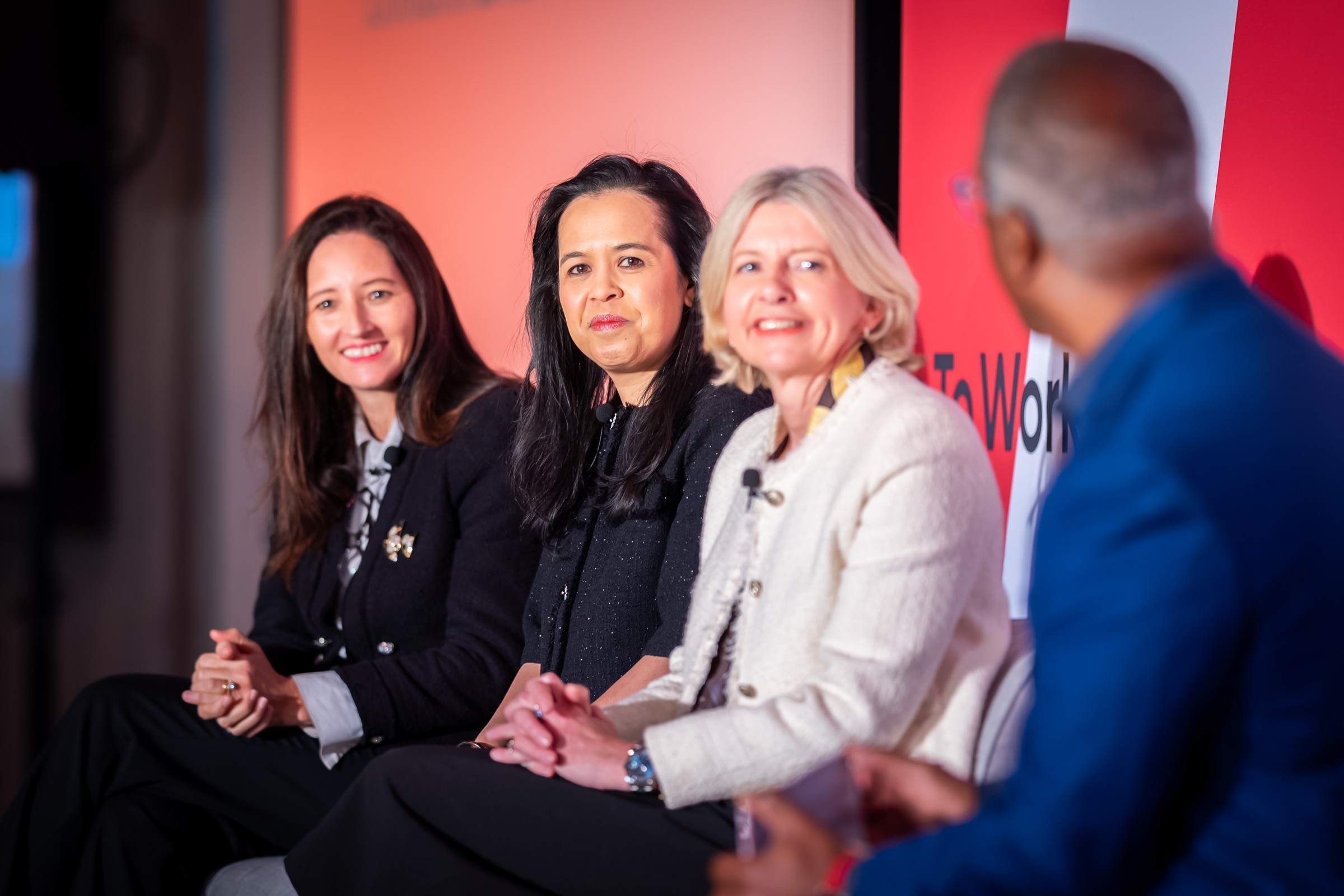
For an organisation continually adapting its business, reinvention cannot happen at the strategic level alone. Leaders themselves have to evolve, learning new skills and behaviours while becoming comfortable with not always having the answer.
To help leaders support that journey, Accenture has partnered with Great Place To Work, to support leaders in four high-trust behaviours – listening, speaking, thanking and inspiring.
As Candida shared, those behaviours can show up in grand gestures as well as small everyday ways – inspiring, for instance, could mean speaking on a stage, or it could simply mean reminding a colleague of their contribution to the organisation's purpose.
Related | See all 9 key leadership behaviours in the Great Place To Work Effect research
6. Great culture builds resilience
The Summit also looked at what happens when strong culture is tested.
For Hilton's Simon Vincent CBE (Executive Vice President and President, EMEA), purpose provides the starting point. From founder Conrad Hilton’s ambition to “spread the light and warmth of hospitality”, purpose flows into values and behaviours, forming the culture that enables sustained business execution. Simon also spoke about the role Team Members play in creating Hilton’s culture every day, the importance of leaders staying close to the people and the business, and creating an inclusive workplace where everyone has the opportunity to thrive. As Simon put it:
“You can have the greatest strategy in the world, but unless you have the culture to execute it you’re not going to be successful.”
That becomes clearest when circumstances change, and teams are put to the test.
Or, put more simply by Simon: “Culture breeds great resilience.”
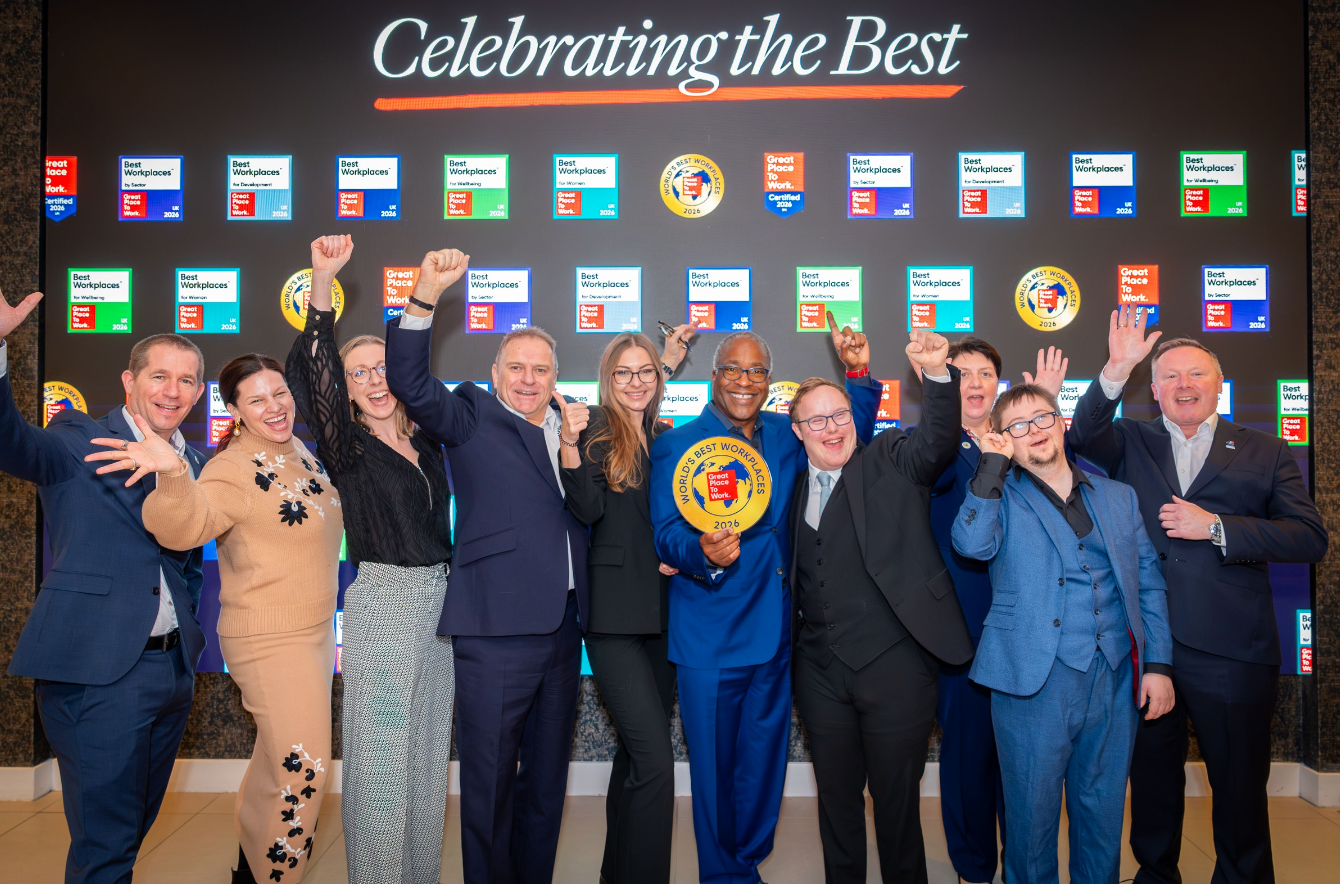
Simon Vincent CBE and Hilton colleagues join Michael C. Bush to celebrate Hilton's third consecutive No. 1 ranking on the World's Best Workplaces List™
The culture advantage in a world that won’t sit still
AI will continue to develop into 2027. Business models will change. Organisations will scale, restructure and reinvent. Leaders won't always know exactly what's coming next. What leaders can shape, however, is the environment in which people respond to it.
Great Place To Work Global CEO Michael C. Bush reminded us of the power of hope, and what it can do for people and organisations:
"Without growth, there is no hope. And without hope, there is no growth. We have to spread hope for all. And that starts with trust."
Because, while strategies, technologies and organisations will keep changing, trust is what gives people the confidence to change with them – and the advantage to thrive amidst disruption.



 Future of Work