

For Sally Pritchett, CEO and Co-founder of Something Big, simply repeating messages "won’t magically create behaviour change." Ahead of her 'Cutting Through the Noise' workshop at the For All Summit™ London 2026, we sat down with Sally to explore how leaders can create the clarity, trust and focus that fuels effective communication.
You’ve spent more than 30 years working in communication, including supporting some of the World’s Best Workplaces™. What have the strongest workplace cultures taught you about the role communication plays in trust and performance?
Sally: It’s taught me how often the power of communication is overlooked. So often, communication is seen as a one-way street to broadcast information to a workforce. The true power comes when communication shifts from monologue to dialogue because people do their best work when they feel part of the conversation.
Communication plays such a huge (but underestimated) role in how employees experience work. It defines how connected they feel, how motivated they are and how purposeful they are in their work.
Looking back on your journey as a founder and leader, what has been the most defining moment in shaping the kind of workplace you wanted Something Big to become?
Sally: Looking back over 26 years, I don’t think there’s been one single defining moment. The times that stand out most are periods of disruption, because they’ve often shown us what matters most and shaped the kind of workplace we’ve become.
From rapid growth in our early years to the pandemic and now AI, change has pushed us to question what’s working, adapt what isn’t, and reinforce the things we never want to lose. If there’s one lesson I’ve learnt, it’s that culture isn’t something you create once. You have to keep working at it through change, and for us, creating a workplace that is fair, healthy and happy has been the foundation for navigating whatever comes next.
Something Big has been Certified™ for six years. What has leading your own workplace taught you about communication and trust?
Sally: Being a leader is humbling beyond anything else. Whatever great intentions you might have, your team gets to judge how they experience your workplace – not you.
Giving them a safe space to give feedback shines a light on how they’re really feeling; what’s working, what’s not, how things are landing, how much they trust you, and even whether they agree with the strategy and the decisions being made.
What I’ve learnt most from partnering with Great Place To Work is how valuable it is to have a platform that my team truly trusts to give their authentic feedback – without that, I have no foundation to work from. It’s up to me and my leadership team to listen to that feedback and drive the change.
In your TEDx talk on communication overload, you said we are “overcommunicating ourselves into burnout and inefficiency”. What had you seen in workplaces that made you feel this way?
Sally: I felt the overload myself, but often felt it was down to my own workload. When I started seeing more and more of our clients feeling it – drowning in back-to-back meetings and messages pinging from every channel – I couldn’t help but look closer at what was causing it.
We’re spending 88% of our working week communicating, which doesn’t leave much time to do the ‘Deep Work’ (as Cal Newport calls it). My research shows how easily we blame technology for the problem, but the real culprit is, as with so many things, human. From excitement and passion to fear and uncertainty, and simply wanting to be helpful or noticed, it’s human behaviour that is the most common cause of the noise.
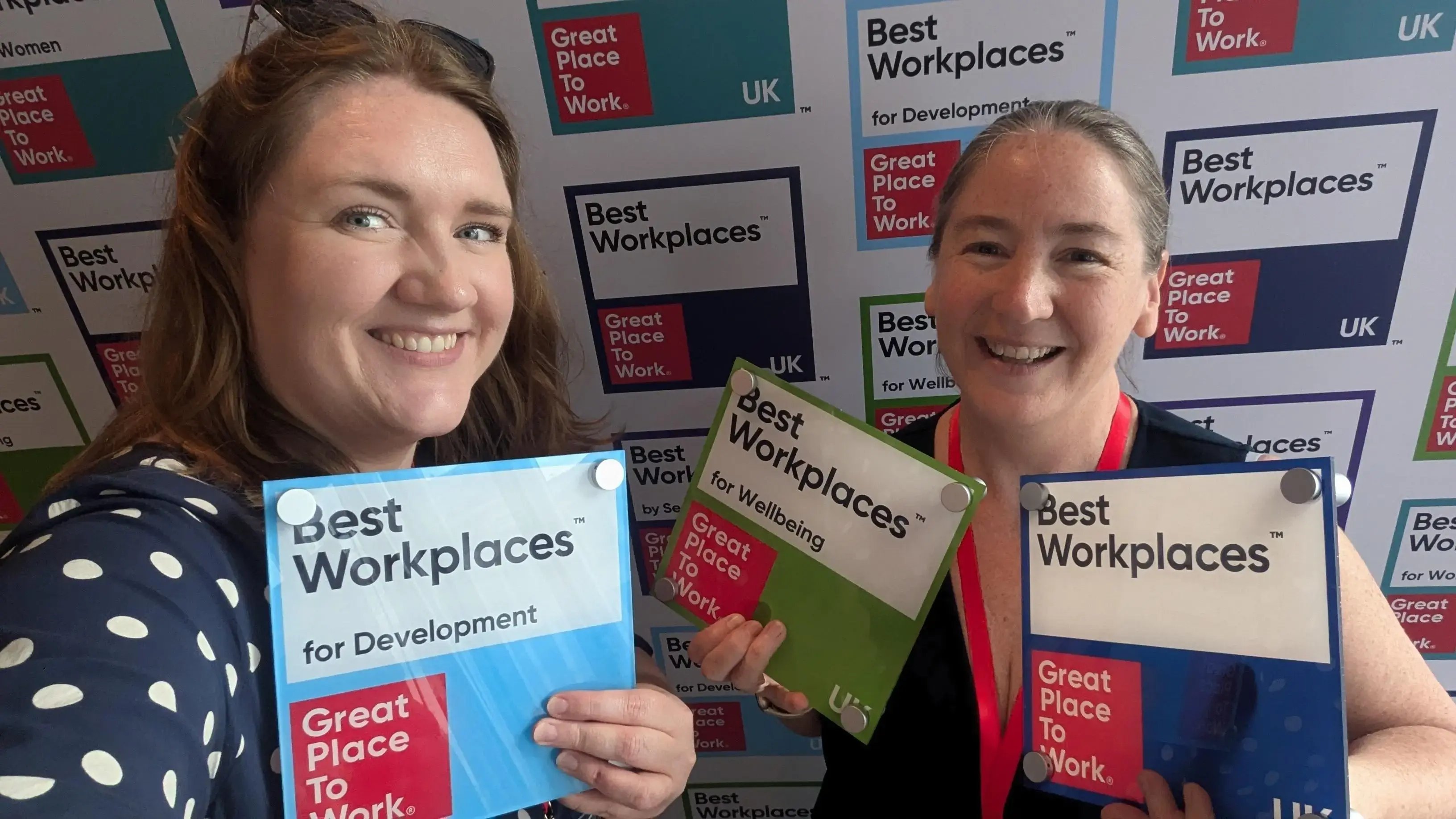
Above: Sally celebrates her company's Best Workplaces™ recognition with Charley Emery-Miller, ESG, Sales and Marketing Manager, at Something Big.
What are the less visible costs of communication overload for employees and organisations?
Sally: Think about how your laptop slows down when there are too many tabs open. This cognitive overload is costing organisations more than they realise; employees are losing sight of their priorities, taking longer to make key decisions and becoming less innovative. And that’s before we consider the wellbeing impact. Burnout and stress are increasing and people are struggling to switch off, feeling the constant pressure of an always-on culture.
I’ve always said that organisations are only as healthy as their people. Right now, the health of the global workforce is fragile at best, and that doesn’t bode well for organisations and economies.
When leaders feel under pressure, the instinct is often to communicate more. How can we tell whether communication is helping or adding to the problem?
Sally: Yes, communicating more is a common response to not seeing traction, momentum or engagement.
I’d encourage leaders to go further in understanding the realities and perspectives of their teams. Often the message has landed, but there are other, sometimes invisible, barriers to action. Simply communicating the same message again won’t magically create behaviour change.
What often adds to the noise is a lack of consideration for the what, who, why and when of communication. What’s at the core of the message, without the fluff? Exactly who needs to hear it? Why do they need to know this, and what’s in it for them? When is the right time? According to the IOIC’s IC Index 2026, most employees have around 10 minutes per day to engage with internal communications – leaders need to respect that time and make it count.
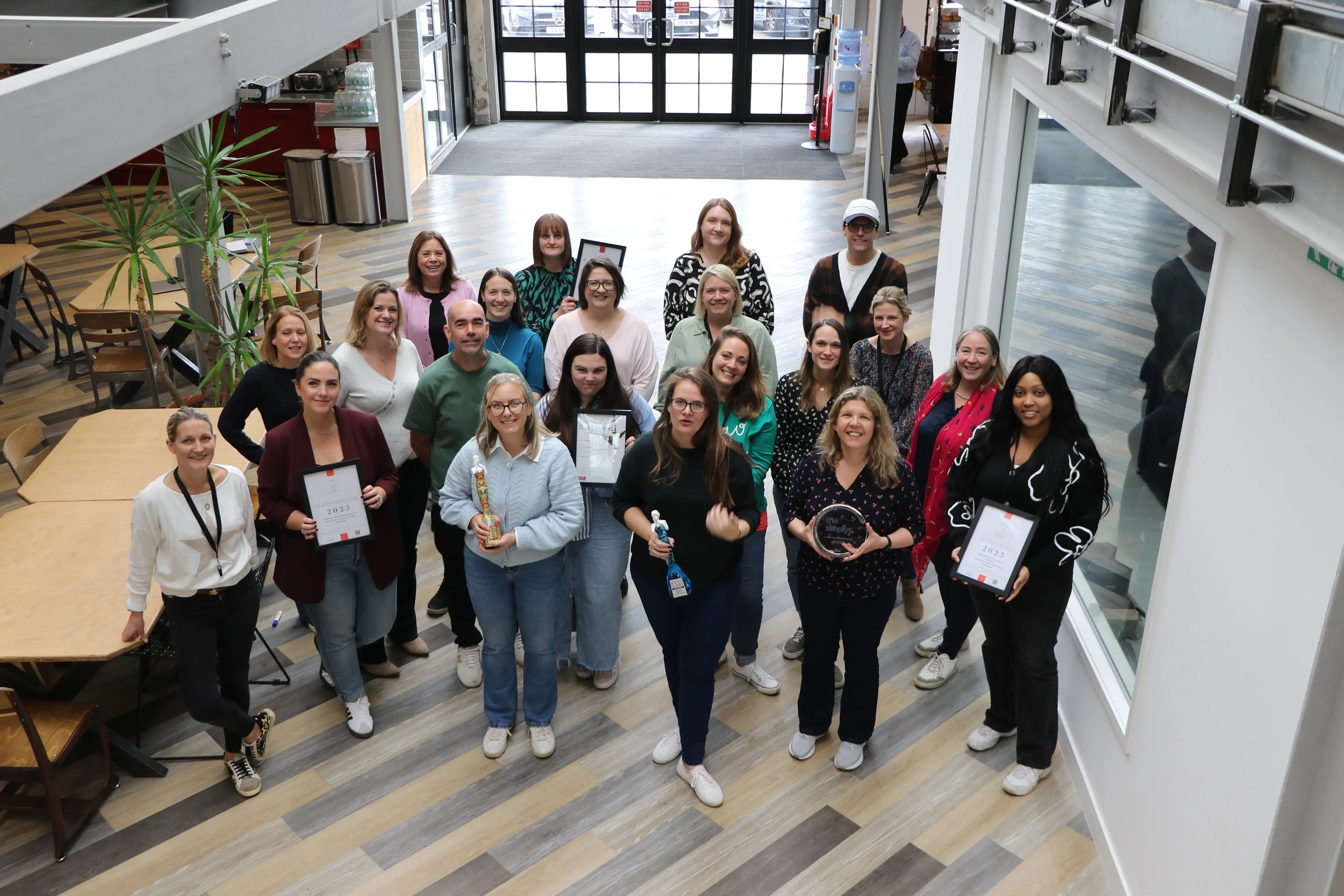
Above: Celebrating recent award wins with some of the Something Big team.
What role should internal communication and people teams play in changing the habits that create overload?
Sally: The role of internal communicators is evolving: rather than churning out a conveyor belt of noise, they need to become trusted advisors to leaders, challenging requests to ensure they’re audience-appropriate, helping leaders agree priorities and creating a sustainable rhythm around the organisation that protects employees from overload.
Offering employees the space to think, focus and deliver their best work will deliver better results than simply drowning them in a plethora of articles, content and inconsistent messaging.
We’re delighted to have you joining us at For All Summit London 2026. What can attendees expect from your interactive workshop, and what do you hope they will take back to their organisations?
Sally: I’ll be showing attendees how easily noise builds up in their organisations and sharing a practical framework that helps reflect on communication behaviour with fresh eyes.
Attendees will walk away with new tools for reducing unnecessary communication and the practical actions they can prioritise straight away in their organisations.

 leadership